

Every week there is another headline warning that the AI bubble is about to burst and cause a total market collapse.
To be honest, “crash” is just a lazy doomsday word people throw around for clicks.
What we are actually looking at is an inevitable market correction. There is a massive difference between stock prices snapping back to real-world value and a technology disappearing overnight. AI is here to stay, but the economics behind the current hype cycle simply do not add up.
Here is my take on what is really happening beneath the surface, why the maths is broken, and what happens when the bill finally comes due.
The Dot-Com Boom Parallel: We Have Seen This Movie Before

To understand where tech is heading today, you have to look back at the dot-com boom of the late nineties.
Back then, the long-term vision for the internet was completely right, but the timing, costs, and infrastructure were completely wrong. Everyone rushed to build websites, yet hardly anyone had the home broadband or mobile access to actually use them properly. You had online pet food shops and e-commerce startups trying to sell goods before nationwide parcel delivery and modern digital payment rails even existed.
When the market correction hit, hundreds of overvalued dot-com startups vanished into thin air. But did the internet die? Not at all. Amazon, eBay, and the foundational pipes of the web survived, matured, and went on to run the modern world.
That is exactly the cycle the AI sector is walking into right now.
The Data Centre Black Hole and Tech Circular Financing
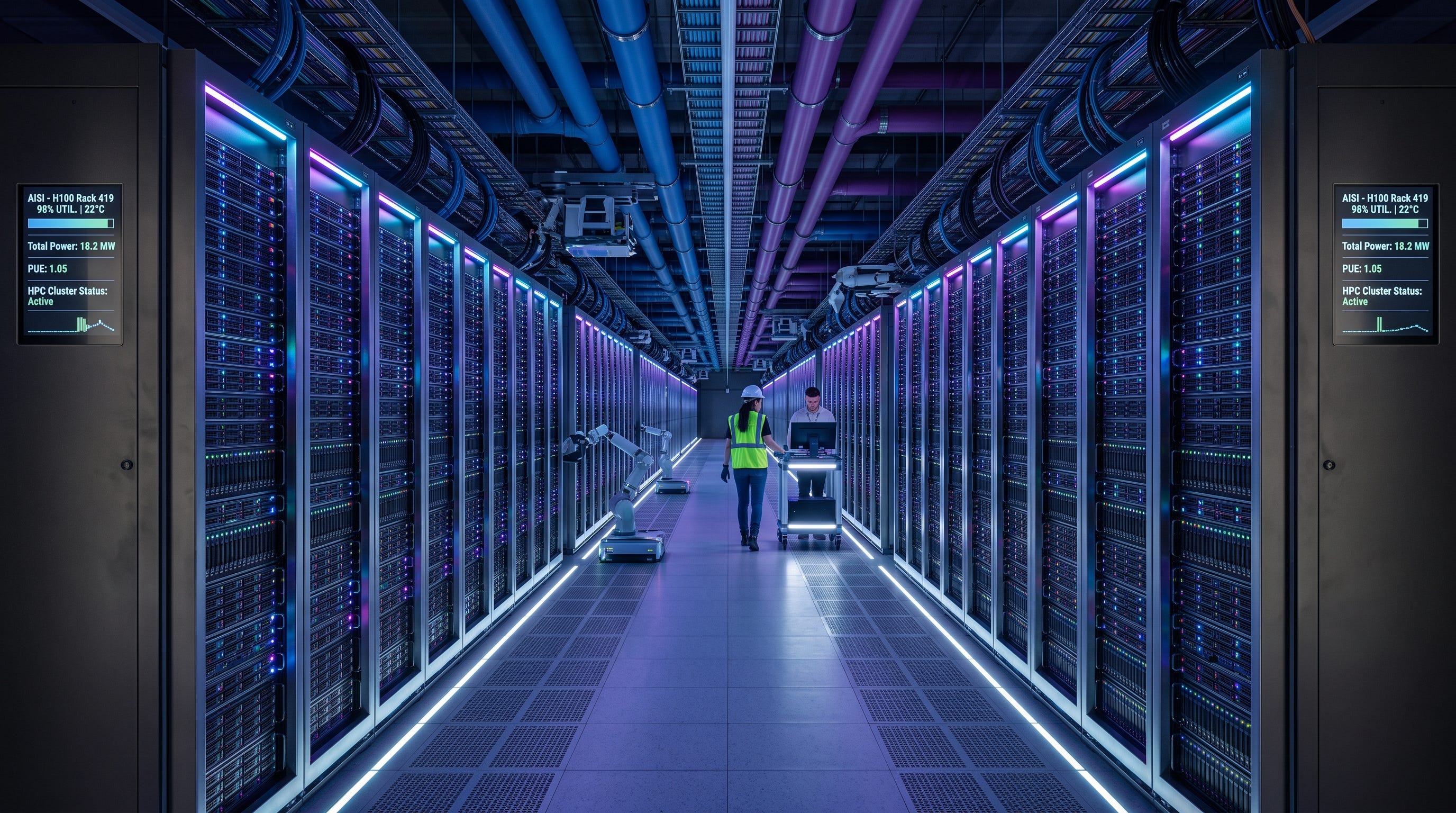
The amount of capital expenditure being poured into AI infrastructure right now is mind-boggling. We are talking hundreds of billions, pushing towards a trillion dollars globally in chips, massive server farms, and energy grids.
Yet if you look at the balance sheets of most AI-first startups, the actual returns are tiny compared to what is being spent.
Think of it like building a luxury block of flats that cost millions to put up. You manage to rent out a couple of spare rooms for pocket change, and you are nowhere near breaking even on the mortgage, let alone turning a profit.
Right now, a handful of mega-cap tech giants are essentially propping up the entire market. In many ways, it is the same pot of cash circulating in a closed loop: Big Tech invests in AI startups, and those startups immediately hand that cash right back to Big Tech to pay for cloud computing and GPU clusters.
When private equity, venture funds, and banks hand over borrowed billions, they expect a tangible return within three to five years. Eventually, investors are going to stop nodding along to hype presentations and ask for their money back with actual interest. When they demand companies put their money where their mouth is, the music stops.
The Subsidised Reality: We Aren’t Paying the True Cost of AI
Ask yourself a simple question: how much does running these massive models actually cost?
Right now, everyday users pay around £20 a month for ChatGPT Plus, Claude, or Google One AI. But that price is heavily subsidised by venture capital and corporate cash reserves burning through runway.
Between the raw electricity, cooling, water usage, and GPU wear-and-tear, running thousands of complex reasoning queries a month costs significantly more than £20 per head. For these providers to break even and turn an honest profit, that subscription could easily need to be closer to £80 or £100 a month.
It reminds me a lot of the lead-up to the 2008 subprime mortgage crisis. Cheap money was handed out freely to inflate the market and get everyone through the door, hiding the structural rot underneath.
If tech giants are forced to price these tools at their actual operating cost, how many casual users and small businesses will keep paying? The market will shrink rapidly to only those who get genuine, measurable enterprise value from it.
Open-Source AI and Global Efficiency
To make matters worse for the big spenders, the idea that you need infinite capital to build useful AI is already falling apart.
Teams in China and the global open-source community are releasing compact, highly efficient models that achieve 80% to 90% of the capability at a tiny fraction of the training and inference cost.
If lean, open-source models can run locally or on modest servers, why would the market indefinitely fund bloated, monstrously expensive proprietary data centres? Building endlessly expensive hardware setups for diminishing returns makes no commercial sense long term.
Market Outlook: Who Actually Survives the Correction?
When the market correction lands, it is going to hurt. Stock prices will take a heavy tumble, and dozens of wrapper startups that never had a sustainable business model will shut their doors.
In the end, only two groups will walk away intact:
The mega-caps with bulletproof balance sheets: Companies that generate reliable billions from other core businesses (like enterprise software, search ads, and retail) and can afford to absorb the write-downs.
Critical sovereign infrastructure: Models and platforms backed or subsidised by governments for defence, cybersecurity, and national data sovereignty.
AI is not going to vanish, but the era of easy money, cheap subscriptions, and unchecked data centre spending is running on borrowed time.
Don’t know about you, some believe a mega crash, end of AI. Other’s believe it is all fear mongering. I’m in the middle.